
PFIC Transactions That Should Be Ignored for Form 8621
Guide to distinguishing reportable PFIC transactions from internal fund accounting noise under IRS rules.
1. IRS Principles for Ignoring PFIC Transactions
This guide explains which PFIC transactions actually trigger U.S. tax and Form 8621 reporting, and which internal transactions can be ignored for purposes of sections 1291, 1293, and 1296.
Under IRC §1291, only two events create PFIC tax consequences:
- Distributions from a PFIC (including excess distributions).
- Gain on the sale or other disposition of PFIC stock.
Under §1293 (QEF) and §1296 (MTM), only statutory basis adjustments—annual inclusions or deductions—affect Form 8621.
Therefore, if a transaction is not a real distribution, a real purchase/sale of PFIC units, or a QEF/MTM basis adjustment, it must be classified as Ignore.
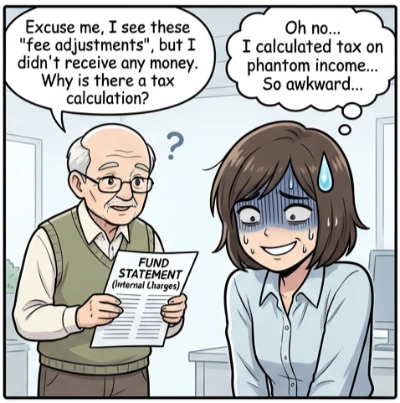
2. Common PFIC Transactions That Should Be Ignored
The entries below generally reflect internal accounting only—no cash received, no units bought or sold, and no QEF or MTM basis adjustment. For §1291 and §1296 purposes, they are normally classified as Ignore:
- “Investment earnings” that simply explain changes in NAV (taxable or non-taxable on the local statement).
- PIE or PIR tax charges recorded inside the policy or wrapper.
- Policy charges, mandated fees, platform fees, admin fees, and management fees netted inside the fund.
- Automatic rebalancing or model-portfolio adjustments between sub-funds.
- Pure valuation changes or internal unit revaluations that do not change the number of units you hold.
Example Data Table
| Date | Details | Units | Value |
|---|---|---|---|
| 2018-09-18 | Investment earnings | 0.28 | 0.28 |
| 2018-09-19 | Investment earnings | -8.50 | -8.50 |
| 2018-09-21 | Mship Fee | -2.81 | -2.81 |
| 2018-09-20 | PIE Tax | 4.46 | 4.46 |
| 2018-09-28 | Fee | -8.42 | -8.42 |
| 2018-10-12 | Management Fees | -3.53 | -3.53 |
Technical References
- IRS Form 8621 Instructions — Official rules for distributions & dispositions.
- IRC §1291 — Excess distribution regime.
- IRC §1296 — Mark-to-market (MTM) election.